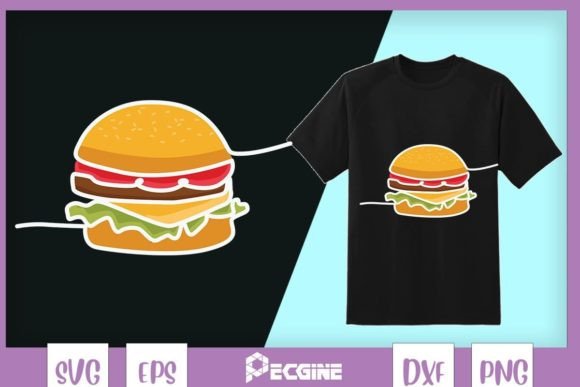
Unlocking Visual Flavor with Burger Graphic Hamburger Art Fast Food
There is a distinct category of design assets that stops the scroll and triggers an immediate sensory response. In the world of typography, these are often classified as novelty or thematic display typefaces. The Burger Graphic Hamburger Art Fast Food package fits perfectly into this niche, offering a bold, thematic solution for projects that need to scream "flavor" without saying a word. This isn't just a collection of letters; it is a visual language built around the universal appeal of fast food. It captures the grease, the texture, and the casual energy of a roadside burger joint, translating it into vector art that designers can deploy instantly.
The Anatomy of the Design
Understanding the visual characteristics of Burger Graphic Hamburger Art Fast Food is essential for effective implementation. This asset leans heavily into the "chunky" aesthetic common in vintage diner signage. The letterforms likely feature heavy strokes, irregular baselines, and perhaps even integrated imagery—think sesame seeds, lettuce edges, or melting cheese integrated into the typography itself. This style belongs to the family of display fonts, meaning it is engineered for impact rather than long-form reading. Its personality is loud, nostalgic, and unapologetically playful. It avoids the stiffness of modern minimalism, opting instead for a handwritten font or hand-lettered vibe that feels organic and authentic.
The appeal lies in its ability to convey a specific brand identity instantly. When a viewer sees this typeface, they don't just read the word "Burger"; they taste the salt and smell the grill. This immediate association is a powerful tool in a designer's arsenal. It creates a visual shorthand for comfort food, speed, and indulgence. For a creative font to work well, it must possess a strong character, and this asset delivers that in spades, acting as the visual equivalent of a neon "Open" sign.
Strategic Applications in Branding and Marketing
While the name suggests a singular focus, the utility of Burger Graphic Hamburger Art Fast Food extends across various commercial and personal projects. The most obvious application is logo design and packaging design for food trucks, pop-up restaurants, and casual dining establishments. However, its utility goes further. Consider the needs of a food blogger creating headers for recipes, or a social media manager needing punchy social media graphics for a summer sale.
- Editorial Design: Use this typeface for pull quotes or feature titles in food magazines to break the monotony of standard serif font or sans serif font layouts.
- Event Marketing: Perfect for flyers promoting community cook-offs, county fairs, or summer block parties.
- Merchandise: The high-contrast nature of the art makes it ideal for T-shirt designs, aprons, and stickers.
- Digital Assets: Web design elements like buttons or hero banners for food delivery apps can benefit from this playful energy.
The key is context. You wouldn't use Burger Graphic Hamburger Art Fast Food for a luxury law firm's letterhead, but for a retro-themed arcade or a gourmet hotdog stand, it is the premium font choice that establishes the right mood immediately.
Technical Specifications and Workflow Integration
A great idea can be ruined by poor file execution. Fortunately, this package is designed for the modern creator's workflow. You receive a ZIP file containing the industry-standard formats: SVG File, PNG File, DXF Files, and EPS Files. This versatility is crucial. The inclusion of DXF Files specifically indicates compatibility with cutting machines, making this a go-to asset for the crafting community.
For those working in Cricut Design Space or Silhouette Studio, the workflow is seamless. You simply upload the SVG or DXF file to the design program. Because these files are vector-based, they are infinitely scalable. Whether you are cutting a small decal for a napkin holder or a large sign for a storefront window, the lines remain crisp. The PNG files are pre-sized and high-resolution with transparent backgrounds, which is a massive time-saver for digital marketers who need to layer the text over photos in software like Canva or Photoshop without dealing with messy background removal.
Mastering Font Pairing and Visual Hierarchy
Using a highly stylized typeface like Burger Graphic Hamburger Art Fast Food requires a strategic approach to font pairing. Because this font is visually dense and energetic, placing it next to another script font or a bold serif font will result in visual chaos. The golden rule of modern typography is contrast. To let the burger art shine, pair it with a clean, neutral sans serif font.
- The Anchor: Use the Burger Graphic font for your H1 headers or focal points.
- The Support: Use a geometric sans serif (like Montserrat or Roboto) for body copy and sub-headers.
- The Balance: Ensure there is plenty of "white space" (or negative space) around the graphic text to prevent the layout from looking cluttered.
This contrast creates a strong visual hierarchy. The eye is drawn to the artistic, high-energy display text first, then naturally flows to the legible body copy for the details. This ensures your message is not only seen but also read, maintaining readability while maximizing audience engagement.
Evaluating Fit and Commercial Licensing
Before integrating any design assets into a professional project, due diligence is required. The first step is evaluating the "fit." Does the visual style of Burger Graphic Hamburger Art Fast Food align with the client's voice? If the brand is trying to convey "fast, fun, and affordable," this is a match. If the brand is "healthy, organic, and minimalist," this font will send the wrong signal.
Next, review the included styles. Check the character map to ensure it includes all the numerals and punctuation you need for your specific project—such as price tags or phone numbers. Finally, verify the licensing. Most digital downloads come with a standard license for personal use and small commercial projects, but if you are planning to use this on a mass-produced product line (like selling thousands of t-shirts), you may need an extended license. Always read the terms to ensure your brand consistency and legal safety are protected.